 11
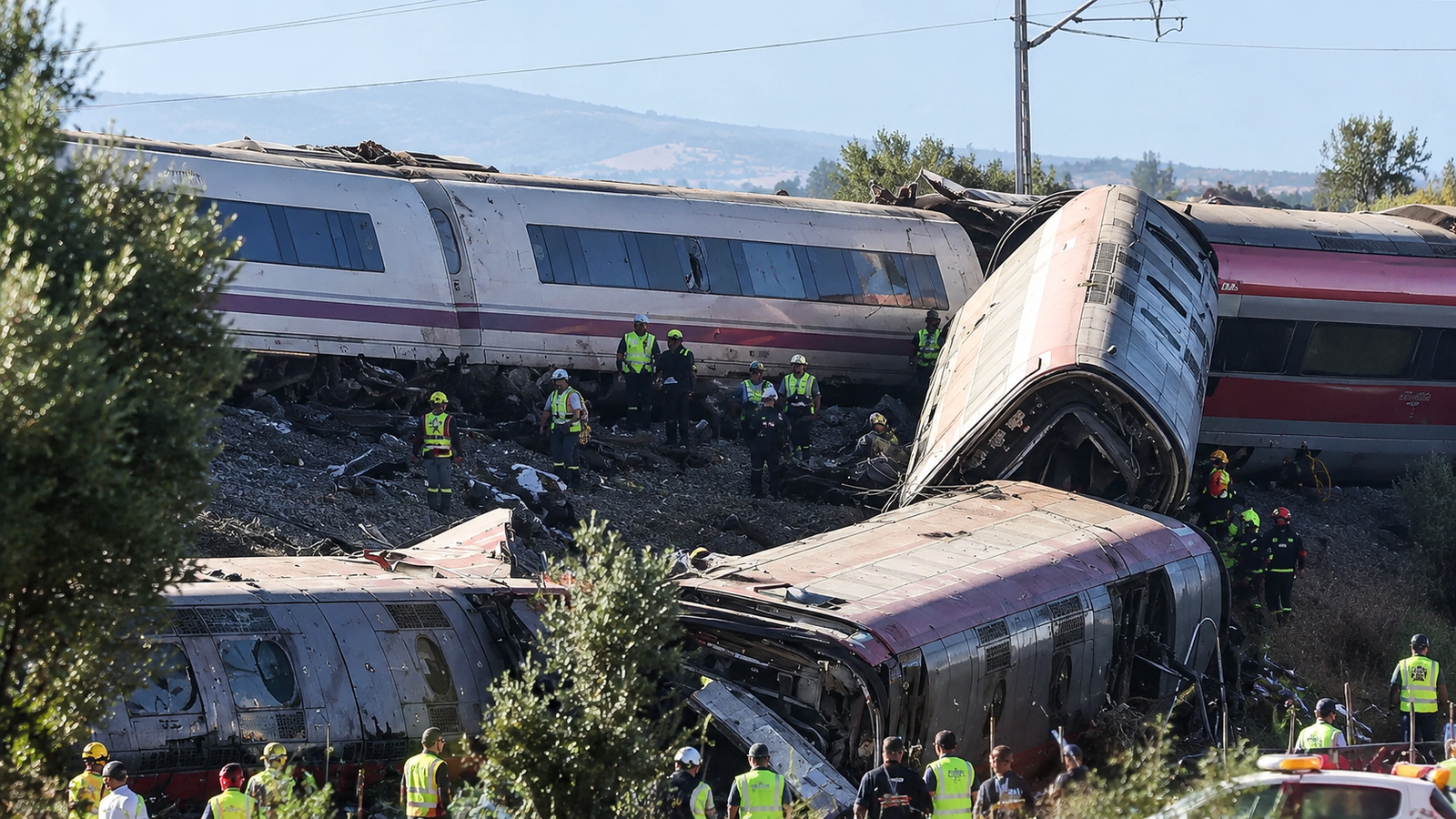
Spain Train Crash At least 30 people have died after two high-speed trains collided in central Spain on Wednesday, October 28, according to regional authorities. The crash prompted an emergency response, disrupted rail services between Madrid and southern Spain, and raised fresh concerns about railway safety. Officials warned that the situation remained serious as emergency teams continued working at the scene.
Spain’s railway infrastructure operator, Adif, suspended services on the Madrid-Andalusia high-speed line following the collision. The disruption affected an important route used by passengers travelling between Madrid and southern destinations, including Seville. The precise cause of the crash has not yet been established.
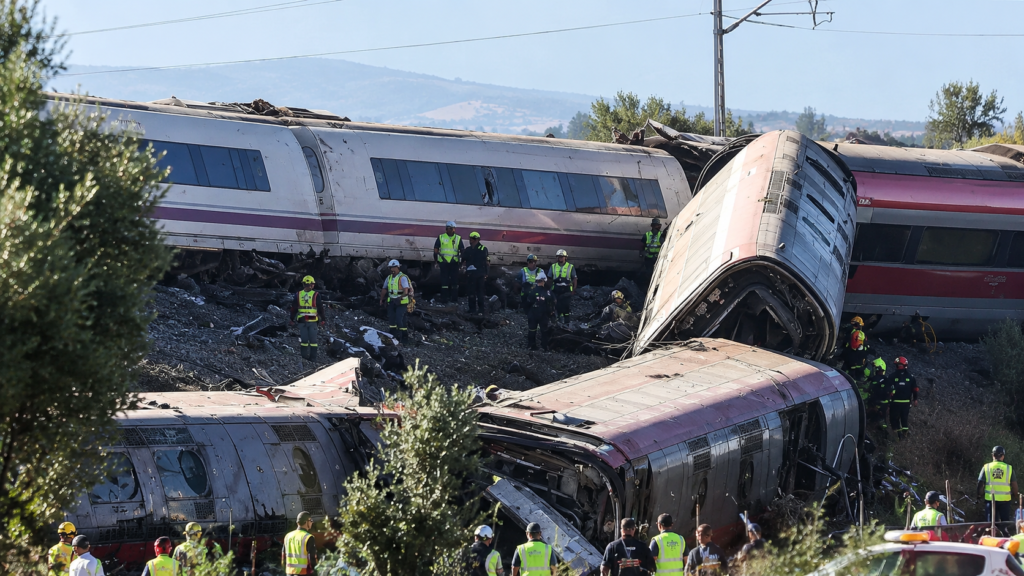
Initial reports indicated that one train struck the rear of another, causing carriages to derail. The impact left damaged railway vehicles at the scene, while emergency services worked to reach passengers and assess the full extent of the disaster.
Regional government spokesperson Esther Padilla confirmed the initial fatalities and warned that the number could rise. As rescue operations progressed, authorities reported a substantially higher death toll. The final number of people killed or injured will depend on further official updates.
The two trains were carrying hundreds of passengers, according to initial reports. Firefighters, medical personnel and civil protection teams were deployed to assist those affected. Emergency workers focused on reaching injured passengers, arranging medical treatment and helping survivors move away from the damaged trains.
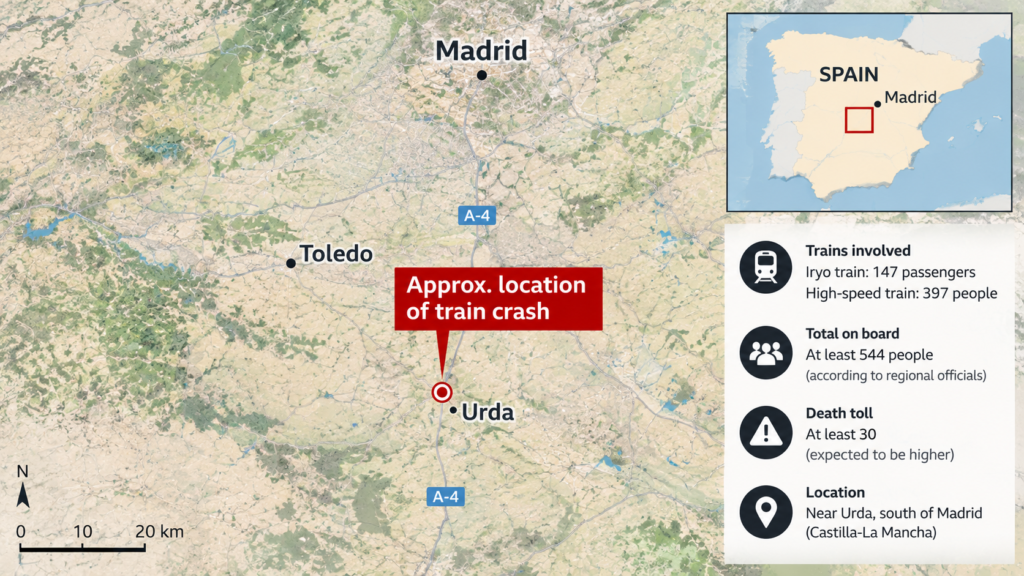
The collision occurred in Toledo province, near the towns of Urda and Los Yébenes, on the high-speed railway corridor connecting Madrid with Andalusia. The trains involved were operated by Spain’s state-owned Renfe and private rail company Iryo. According to Reuters’ report on the Spain train collision, the confirmed death toll rose from an initial 10 to at least 30 as authorities received further information.
Local authorities also prepared facilities to accommodate passengers who needed assistance following the collision. The response involved coordination between regional officials, emergency services and railway operators, with priority given to rescuing survivors and providing medical support.
Further details about the injured passengers and the circumstances surrounding the crash were expected as officials continued their assessment. Families were also seeking information about people who had been travelling on the affected trains.
The suspension of high-speed rail services created disruption for travellers across the region. Passengers using the Madrid-Andalusia corridor faced possible cancellations and delays while railway officials assessed the affected infrastructure. Travellers can check updates through Adif’s official website and their respective railway operators before making alternative travel arrangements.
Authorities have not yet confirmed when normal services will resume. The reopening of the line will depend on the completion of emergency operations, safety inspections and any repairs required after the collision.
Investigators will now examine the events that led to the crash. Their work is expected to include reviewing train movements, signalling records, communications and the technical condition of the railway vehicles. These checks can help establish whether the collision resulted from an operational problem, a technical failure or another factor.
Although early reports described a rear-end collision, the exact sequence of events remains under investigation. It would be premature to attribute responsibility to a railway operator or individual before investigators have examined the evidence.
The findings will be important for understanding how the crash occurred and whether additional safety measures are necessary. Authorities will also need to communicate the results clearly to passengers and the wider public.
The accident has renewed attention on railway safety in Spain, which operates an extensive high-speed rail network connecting major cities. These services are an important part of the country’s transport system, carrying passengers for work, business, tourism and family travel.
The latest disaster comes after a separate deadly train accident near Adamuz, in Córdoba province, in January 2026. That crash killed dozens of people and prompted questions about railway safety and infrastructure maintenance. The two incidents occurred under different circumstances, and investigators have not established that they share the same cause.
Nevertheless, another fatal collision involving high-speed trains is likely to intensify public scrutiny of railway operations, maintenance standards and the measures used to protect passengers. Any recommendations arising from the investigation could influence future safety procedures.
Spanish Prime Minister Pedro Sánchez expressed shock over the accident and offered support to the victims and their families. Government and regional officials continued monitoring the emergency response as further details emerged.
For those affected, the immediate priorities remain medical care, reliable information and assistance for families searching for news about passengers. Railway authorities must also assess the damage and determine when the affected route can safely reopen.
The collision represents a major emergency for Spain’s transport network, but important questions remain unanswered. Investigators have yet to establish the precise cause, and the full extent of the casualties may become clearer as authorities complete their work.
As rescue and recovery operations continue, updates from Spanish authorities and railway officials will be essential to understanding the scale of the disaster. The investigation should provide a clearer account of what happened and whether further measures are needed to prevent similar incidents.
This is a developing story. Casualty figures, investigation findings and rail service information may change as more verified details become available. Readers can follow further international developments through PeakHoursNews’ World News coverage.