 11
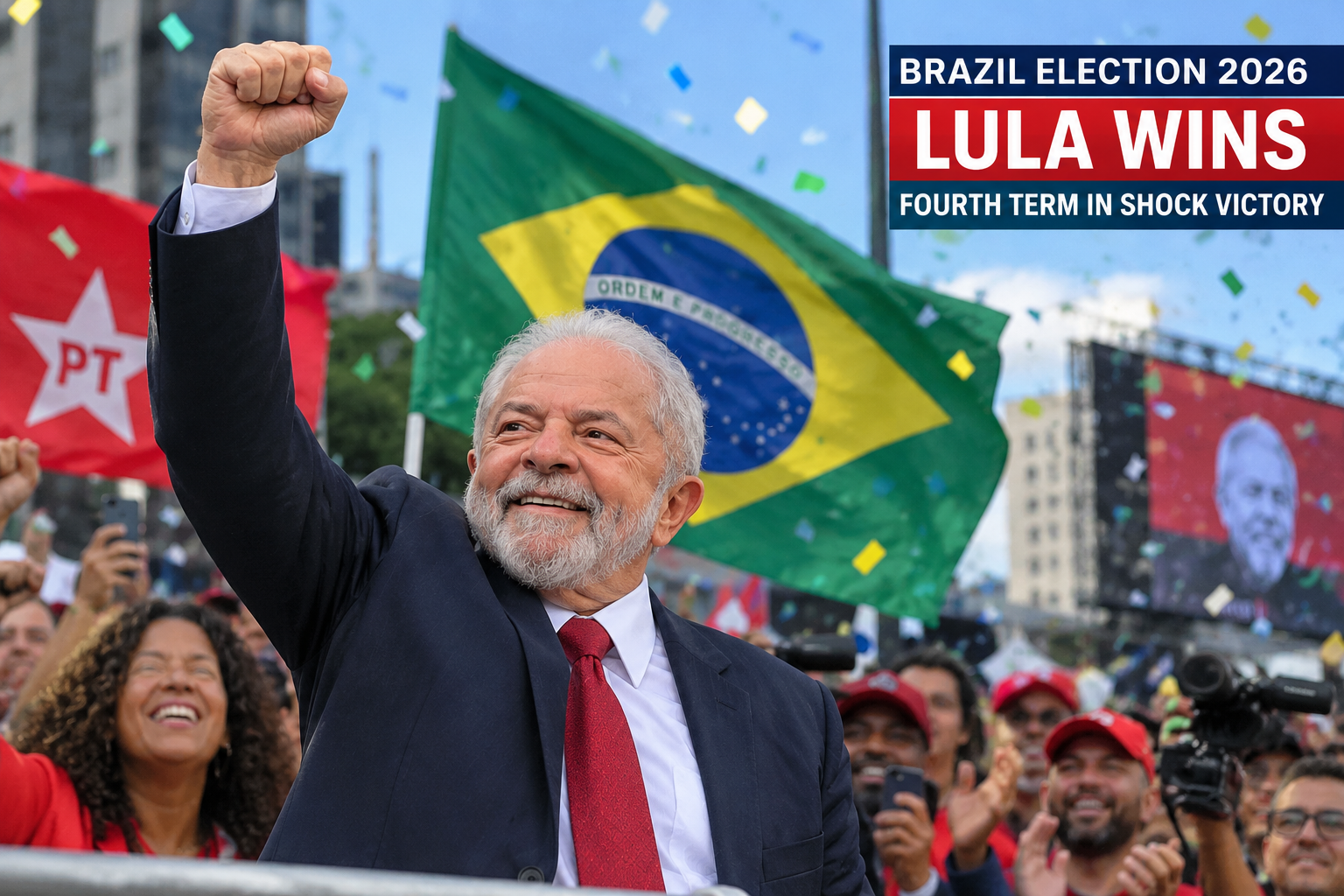
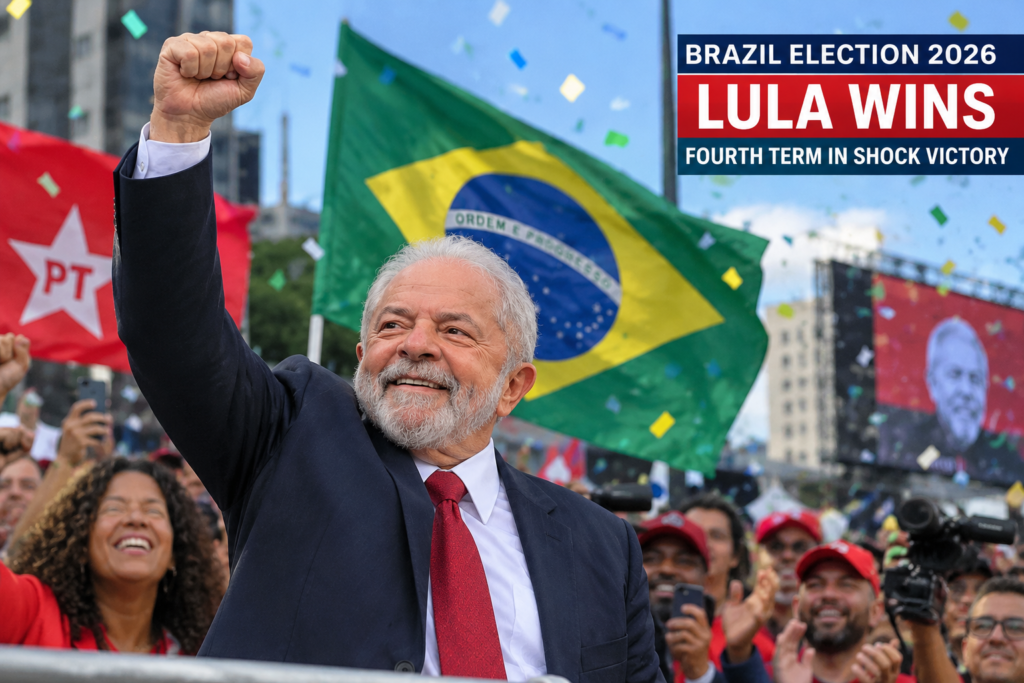
Brazil Election President Luiz Inácio Lula da Silva has secured an unprecedented fourth presidential term after defeating right-wing challenger Flávio Bolsonaro in a closely contested election. The result marks a dramatic political comeback and sets the stage for another challenging period in Latin America’s largest country.
Brazilian President Luiz Inácio Lula da Silva has won a fourth, non-consecutive term in office after defeating Senator Flávio Bolsonaro in the presidential runoff held on October 25, 2026.
Official results from Brazil’s Superior Electoral Court (TSE) showed Lula receiving 51.79% of valid votes, while Bolsonaro secured 48.21%. The result gave Lula a lead of more than four million votes.
According to Reuters’ election coverage, the victory came despite Lula trailing Bolsonaro in the first round of voting earlier in October.
Lula’s supporters celebrated the result as a major political comeback. His campaign focused on economic stability, social welfare and protecting programmes aimed at supporting lower-income households.
The election took an unexpected turn during the first round, when Flávio Bolsonaro finished ahead of Lula. Bolsonaro received approximately 47.03% of valid votes, compared with Lula’s 45.16%, forcing the candidates into a runoff.
The campaigns then entered a decisive period of political outreach, public rallies and efforts to persuade undecided voters.
Lula focused heavily on the cost of living, social welfare and his government’s record on poverty and employment. His campaign sought to convince voters that continuing his administration would provide greater economic stability and protect social programmes.
His supporters also organized demonstrations and online campaigns to encourage participation. These efforts helped the president recover from his first-round setback.
The result marks a significant moment in Brazilian electoral politics, as Lula overcame an initial deficit to secure another presidential term.
Flávio Bolsonaro has questioned the election outcome and called for the results to be annulled. His objections focus on the decision to extend voting hours in some locations after transportation difficulties affected access to polling stations.
Brazil’s electoral authorities extended voting by two hours at polling stations that were still open after a decision by the country’s Supreme Federal Court. Lula’s campaign had raised concerns about transportation problems, while Bolsonaro’s campaign also requested additional time because of adverse weather conditions in some areas.
The decision became a point of controversy after the final results were announced.
However, election officials confirmed Lula’s victory after the vote count. Bolsonaro’s challenge would need to be considered through the country’s legal institutions, and overturning the result would require sufficient legal grounds.
The dispute highlights the political divisions that continue to shape Brazil. The country’s institutions will face pressure to maintain public confidence in the electoral process as both sides respond to the outcome.
Lula is one of the most influential political figures in Brazil’s modern history. A former metalworker and trade union leader, he entered national politics after becoming involved in labour movements during the country’s transition away from military rule.
He first became president in 2003 and served two consecutive terms until 2010. During those years, his administration became associated with social welfare programmes and efforts to reduce poverty and inequality.
Lula later returned to the presidency after winning the 2022 election against former President Jair Bolsonaro, Flávio Bolsonaro’s father.
His return followed a period of legal and political controversy. Lula had spent time in prison following corruption convictions that were subsequently annulled, allowing him to return to electoral politics.
His third presidency brought renewed attention to social protection, environmental policy and Brazil’s international relationships.
However, his government also faced criticism over economic pressures, household debt, public spending and concerns about crime. These issues remained important throughout the latest election campaign.
His fourth term will give him another opportunity to pursue his political priorities, but his administration will continue to face scrutiny over whether its policies deliver measurable improvements for ordinary Brazilians.
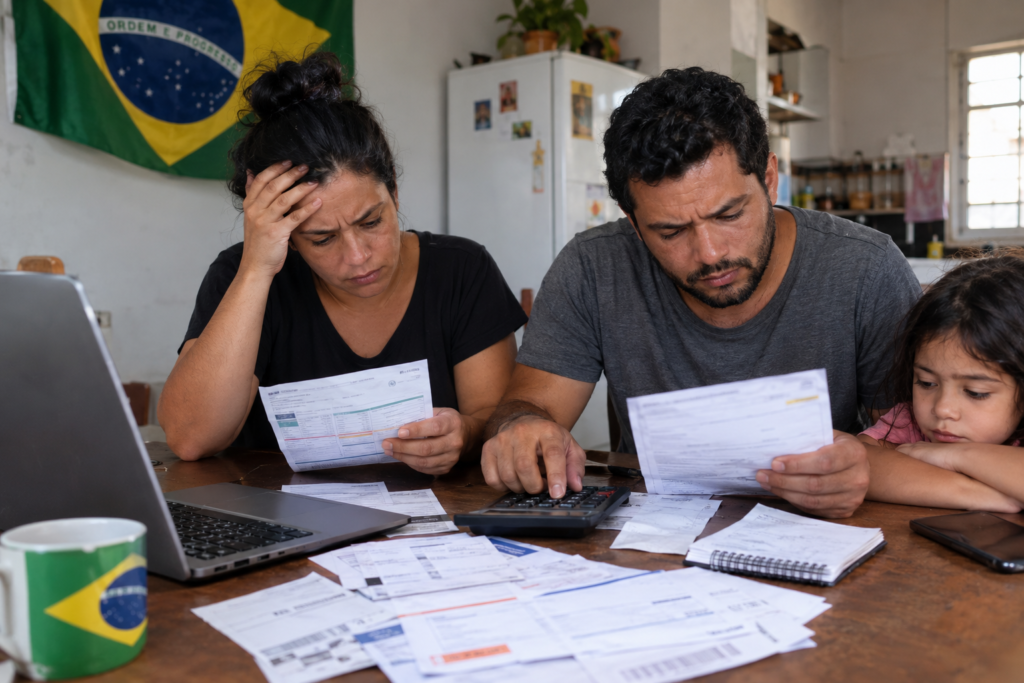
Although Lula’s victory strengthens his political position, Brazil continues to face significant economic challenges.
Household finances have been a major concern for many voters. Rising living costs, debt repayments and questions about purchasing power have influenced public opinion throughout the campaign.
Lula emphasized the importance of reducing poverty and protecting lower-income households. His proposals included measures aimed at easing transportation costs and supporting working people.
His administration will now need to translate campaign promises into policies that can be implemented within the country’s financial limits.
Public debt, borrowing costs and economic growth will remain important factors in determining the government’s room for manoeuvre. Policymakers must balance social spending with the need to maintain economic confidence.
Brazil’s economic performance will also influence its position in global markets. As a major agricultural producer and an important emerging economy, the country plays a significant role in international trade, energy and commodity markets.
Readers can explore the World Bank’s Brazil country overview for additional context on the country’s economic development, poverty reduction and broader development challenges.
One of Lula’s biggest obstacles may come from the Brazilian Congress.
Although he has secured another presidential mandate, his political opponents retain considerable influence in the legislature. A strong conservative presence could make it difficult for the government to pass legislation and implement major reforms.
Lula will need to negotiate with lawmakers from different political groups to advance his priorities. Building support for budgets, social programmes and economic measures may require compromises that reshape parts of his agenda.
The president will also face pressure to address crime, improve public services and respond to voters who remain dissatisfied with the direction of the country.
Political divisions are unlikely to disappear simply because the election has ended. The government will need to demonstrate that it can govern effectively beyond its traditional support base.
How Lula manages these relationships could determine whether his fourth term produces lasting policy achievements or becomes dominated by legislative disputes.
Lula’s victory carries significance beyond Brazil’s borders.
Across Latin America, political debates have increasingly focused on economic inequality, security, public spending and the role of government. The Brazilian election highlights the continued strength of left-wing politics despite gains by conservative leaders in several countries.
Lula has also positioned Brazil as an important voice in discussions about climate change, international cooperation and global economic reform.
His administration has emphasized the protection of the Amazon rainforest, an issue with implications for biodiversity, global emissions and international climate commitments.
The election result may also influence Brazil’s relationships with major powers, including the United States, China and European countries. Trade, investment and environmental cooperation will remain important areas to watch.
However, Lula’s ability to pursue his international ambitions will partly depend on domestic economic conditions and his government’s ability to secure legislative support.
Lula’s fourth term begins with a historic electoral victory, but the challenges ahead are substantial.
The president must address economic pressures, respond to concerns about crime, maintain public confidence and work with a divided legislature. He will also need to navigate the political fallout from Bolsonaro’s refusal to accept the result.
For Brazil, the election represents both continuity and uncertainty. Voters have chosen to retain an experienced leader, but the narrow margin shows that the country remains deeply divided over its political future.
The coming months will reveal whether Lula can turn his unexpected comeback into a broader governing mandate.
His success will ultimately depend not only on the historic nature of his victory but also on whether his administration can improve living standards, strengthen democratic institutions and deliver tangible results for people across Brazil.
For now, Lula’s return to office marks a remarkable chapter in Brazilian politics, one that will be closely watched throughout Latin America and around the world.
Sources: Brazil’s Superior Electoral Court, Reuters and the World Bank’s Brazil overview.