
 11
The cryptocurrency industry is facing renewed questions about digital asset security after Binance, the world’s largest cryptocurrency exchange, identified multiple potential weaknesses connected to a security incident estimated to have affected approximately $6.3 billion in digital assets. The incident, which took place on October 29, 2026, is being described as the largest cryptocurrency hack ever reported.
Binance has launched an extensive investigation to establish exactly how attackers gained access to its systems and managed to carry out unauthorised transactions. Initial findings suggest that a compromised laptop belonging to a DevOps engineer may have provided the attackers with an entry point into the exchange’s internal infrastructure.
The scale of the incident has attracted international attention, with blockchain investigators, security companies and cryptocurrency businesses working to trace the affected funds. Although Binance has reassured customers that their assets remain protected, the incident has raised serious concerns about the security arrangements used by even the largest platforms in the digital asset industry.
According to Binance’s preliminary investigation, the incident may have started with a compromised computer belonging to one of its engineering team members. The device reportedly provided an attacker with access to an internal service container, creating an opportunity to submit unauthorised withdrawal transactions.
The exchange has indicated that the security incident involved multiple factors and that investigators are examining the complete attack path. This suggests that the investigation is not limited to identifying the initial point of entry but also involves understanding how the attackers moved through the affected systems.
One important finding is that Binance has not identified evidence that its wallet private keys were leaked. Private keys are essential security credentials that allow cryptocurrency transactions to be authorised. Their exposure could create significant risks for digital asset holders.
However, the absence of evidence of leaked keys does not mean the security system was unaffected. Investigators are examining whether attackers were able to misuse authorised infrastructure to make transactions appear legitimate.
The distinction is particularly important because cryptocurrency exchanges depend on several connected systems to process withdrawals, manage wallets and verify transactions. A weakness in one part of this infrastructure can potentially create opportunities for attackers to interfere with other operations.
The estimated financial impact makes the Binance incident particularly significant. The exchange reported that approximately $6.3 billion worth of cryptocurrency was affected, placing the event ahead of previous major security incidents in the industry.
Binance has been working with blockchain analytics companies, security specialists and other industry partners to identify and freeze assets connected to the attack.
According to information released by the exchange and its partners, approximately $3 billion in affected assets had been located or frozen. However, the remaining amount was still being investigated, with further efforts focused on tracking transactions and preventing the movement of funds.
Blockchain technology records transactions on publicly accessible networks, allowing investigators to follow the movement of many digital assets between wallet addresses. Although this transparency can help identify suspicious activity, recovering cryptocurrency is not always straightforward.
Attackers can move funds between different wallets, exchange tokens or use decentralised financial platforms to make tracing more complicated. Investigators must therefore work quickly with exchanges, token issuers and blockchain security companies to prevent additional transfers.
The incident also demonstrates why cooperation across the cryptocurrency industry has become increasingly important when responding to large-scale attacks.
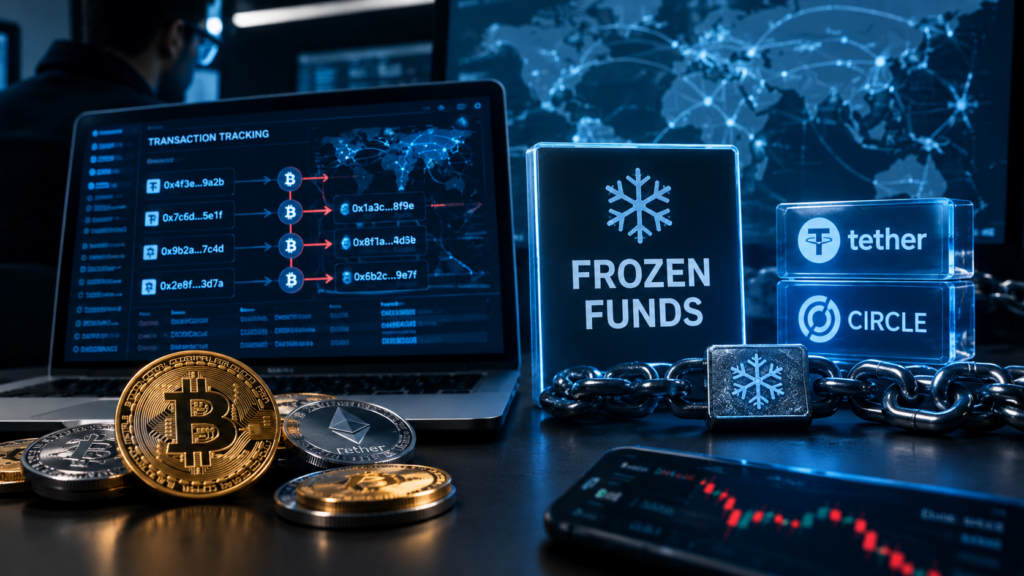
Following the discovery of the incident, Binance began coordinating with external organisations to identify affected wallets and restrict the movement of suspicious assets.
Stablecoin issuers Tether and Circle have also taken action against funds connected to the incident. Their ability to freeze certain tokens can prevent attackers from transferring or spending those assets while investigations continue.
Reports indicate that Tether froze approximately $1.57 billion in related assets, while Circle froze more than $800 million. Other cryptocurrency organisations have also contributed to efforts to restrict the movement of affected funds.
These actions highlight an important difference between traditional cryptocurrencies and centrally issued stablecoins. While Bitcoin transactions generally cannot be reversed or frozen by a central authority, certain stablecoins include administrative controls that allow their issuers to restrict specific wallet addresses.
Nevertheless, freezing assets does not automatically mean that the money has been returned to its original owner. Investigators must still establish ownership, complete the necessary procedures and determine how the affected funds can be recovered.
Binance has said it is continuing to work with law enforcement agencies and industry partners to trace the remaining assets.
The incident has naturally raised concerns among Binance customers, particularly those who use the platform to store and trade cryptocurrency.
In response, the exchange has maintained that customer funds are safe and that it will cover losses resulting from the security incident. Co-founder Yi He also indicated that the company would take responsibility for the hacking losses.
Binance has a Secure Asset Fund for Users, commonly known as SAFU, which was established to provide an additional layer of protection for customers in certain emergency situations.
The company has also indicated that it will use its available resources to address the financial impact of the incident.
As part of its response, Binance temporarily suspended deposits and withdrawals while its security teams carried out checks and worked to secure the affected wallet infrastructure. The exchange has also said it intends to provide an updated proof of reserves and publish a detailed technical explanation once its investigation is complete.
These steps are intended to reassure customers and demonstrate that the company is taking the incident seriously.
However, rebuilding confidence may require more than financial compensation. Customers and industry observers will likely want a clearer explanation of how the attackers gained access and what measures Binance plans to introduce to prevent similar incidents.
Another important aspect of the investigation concerns the possible identity of the attackers.
Several blockchain security specialists and investigative organisations have suggested that the attack may share characteristics with operations previously associated with North Korean cybercriminal groups.
The tactics reportedly observed during the incident have attracted comparisons with the February 2025 Bybit hack, in which attackers stole approximately $1.5 billion in cryptocurrency.
Some investigators believe the techniques used in the Binance incident could be consistent with sophisticated operations previously linked to the Democratic People’s Republic of Korea.
However, identifying the individuals or organisations responsible requires further evidence. Binance has not publicly confirmed the identity of the attackers, and any connection to a particular hacking group should therefore be treated as an investigative assessment rather than an established fact.
Authorities and blockchain intelligence companies are continuing to examine transaction patterns and other available evidence.
The news has also affected cryptocurrency markets, with several major digital assets experiencing downward pressure following reports of the breach.
Bitcoin fell by more than 3% during early Asian trading, reaching a six-week low, while Ethereum also recorded losses. Binance’s BNB token experienced additional selling pressure as investors assessed the potential consequences for the exchange.
The reaction reflects the importance of investor confidence in the cryptocurrency market. Even when an exchange promises to compensate affected customers, a major security incident can create uncertainty about the safety of digital assets held on centralised platforms.
The incident may also encourage investors to reconsider how they store their cryptocurrency and whether they should keep large holdings on exchanges for extended periods.
For the wider industry, the consequences could extend beyond Binance. Cryptocurrency exchanges, wallet providers and blockchain infrastructure companies may face increased pressure to demonstrate that their security systems can withstand increasingly sophisticated attacks.
Binance’s investigation remains an important step in understanding the full scale of the incident. The company must establish how attackers entered its infrastructure, identify weaknesses in its security procedures and determine whether additional systems were exposed.
The recovery of affected funds will also remain a priority. Although billions of dollars have reportedly been frozen or located, the remaining assets could prove more difficult to recover if attackers successfully move them through different blockchain networks.
The exchange’s promised technical report and updated proof of reserves may provide customers with further information about its response and financial position.
For now, the incident serves as a major warning for the cryptocurrency industry. The size of an exchange, the number of its customers and the value of its assets do not eliminate the risks associated with compromised systems and unauthorised access.
As investigations continue, the Binance breach is likely to influence discussions about digital asset protection, exchange security and the responsibilities of companies operating in the global cryptocurrency market.
For more developments on cryptocurrency, technology and international business, readers can follow PeakHoursNews for further updates.