
 11
Europe is witnessing a growing interest in tiny cars, with compact electric vehicles becoming an increasingly popular choice among teenagers, older drivers and people living in rural communities. Once considered unusual alternatives to conventional cars, these small vehicles are now attracting a younger generation looking for affordable, convenient and independent transportation. According to a recent BBC report on the growing popularity of tiny cars, demand for these vehicles has increased significantly across several European countries.
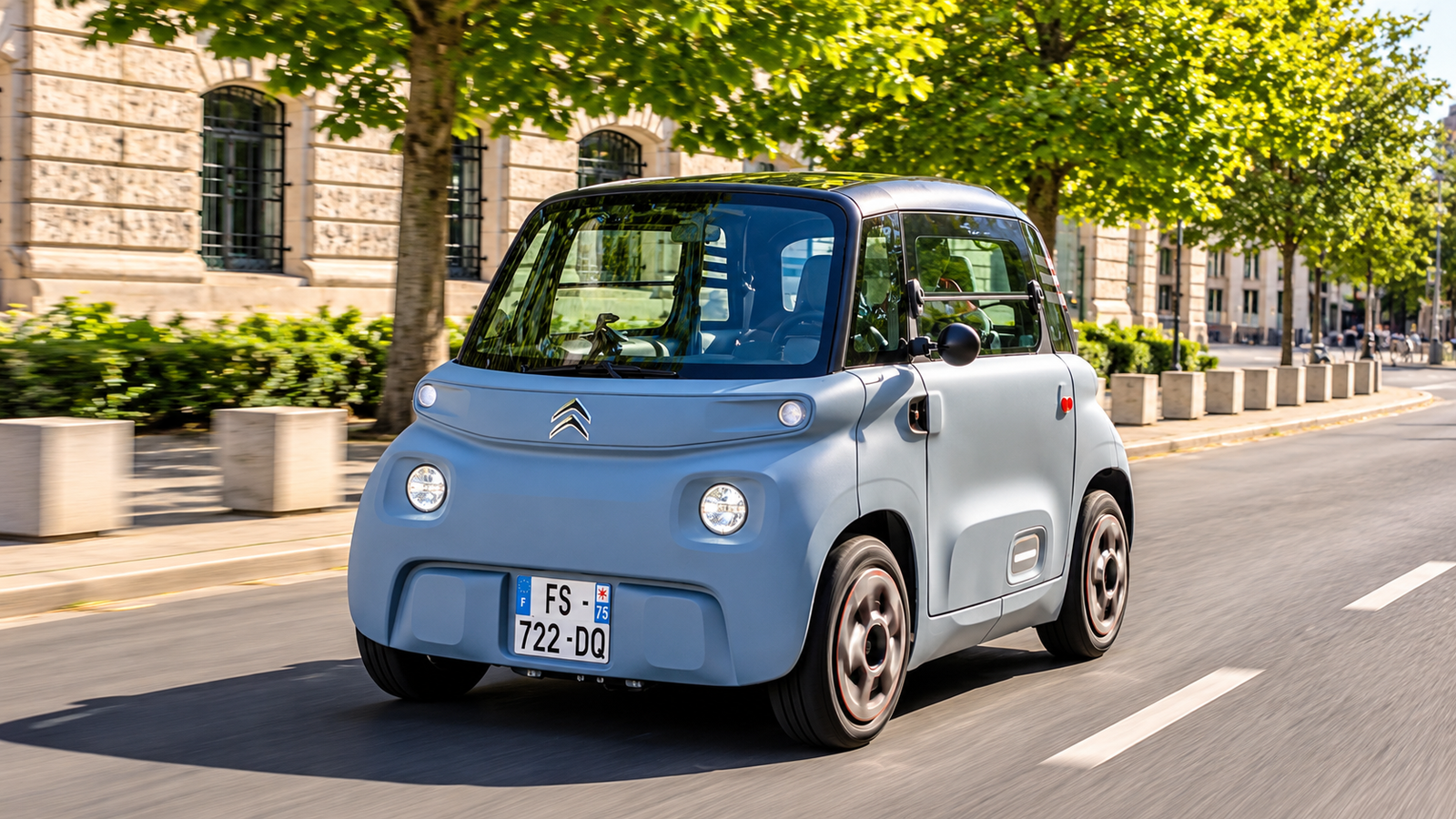
The trend reflects changing attitudes towards personal mobility, particularly as electric vehicles become more accessible and traditional transport options face increasing costs. Models such as the Citroën Ami are helping reshape the market by offering a practical alternative to scooters and motorcycles.
The popularity of microcars has increased considerably across Europe in recent years. According to figures highlighted by the BBC, European sales of these vehicles have doubled over the past five years, rising from approximately 30,000 to 60,000 annually.
France has emerged as one of the leading markets. Registrations increased from around 13,000 in 2019 to approximately 25,000 in 2025, demonstrating the growing demand for compact transportation.
One of the biggest contributors to this change has been the Citroën Ami, an electric microcar introduced in 2020. Its unusual appearance, compact dimensions and relatively straightforward driving requirements have helped introduce these vehicles to a much wider audience.
The market is no longer limited to people who struggle to access conventional transportation. Younger customers are increasingly choosing microcars because they offer independence without requiring a full-sized vehicle.
The shift towards electric power has played an important role in the growing popularity of tiny cars.
More than 67% of new licence-free cars sold in 2026 are electric, according to market analyst AAA Data, as reported by the BBC. This reflects a broader movement towards smaller electric transportation options.
Electric microcars are particularly attractive for short journeys. Their compact batteries and relatively simple designs make them suitable for everyday travel without the need for the larger battery systems found in conventional electric cars.
Manufacturers are also introducing more sophisticated designs, improved interiors and additional features to attract customers who previously considered microcars outdated.
The Fiat Topolino and models from Aixam and Ligier demonstrate how manufacturers are competing to make these vehicles more appealing.
Industry research also identifies urban congestion, parking costs and the demand for lower-emission transportation as important factors supporting the wider microcar market.

One of the most interesting developments is the growing interest among teenagers.
In countries such as France and Italy, certain lightweight quadricycles can legally be driven from the age of 14, provided drivers meet the relevant training and licensing requirements. The minimum age is 15 in Germany and Spain, while the UK allows eligible drivers from 16.
For teenagers living outside major cities, these vehicles can make everyday journeys considerably easier. Travelling to school, visiting friends and reaching nearby shops becomes more convenient when public transport is limited.
The BBC recently highlighted the experience of 16-year-old Selena Buse, who uses her Citroën Ami to travel to school and visit friends. For her, the vehicle provides independence that would otherwise be difficult to achieve in a rural area.
Safety and protection from changing weather conditions are also important considerations. Compared with scooters and mopeds, enclosed microcars offer passengers a covered cabin and four wheels.
According to French manufacturer Ligier, younger customers now represent an important part of its customer base, showing how significantly the audience for these vehicles has changed.
Despite their growing popularity, tiny cars are not suitable for every journey.
Many lightweight microcars have a maximum speed of 45km/h and are prohibited from using motorways. Their limited speed makes them practical for local travel but less suitable for longer journeys or roads where traffic moves considerably faster.
Their smaller construction also raises questions about passenger protection during collisions involving larger vehicles.
Drivers may feel comfortable travelling through quiet villages and residential streets, but sharing faster roads with heavy vehicles can create additional risks.
The European Parliament has addressed vehicle safety and regulatory issues involving different categories of vehicles. As the microcar market develops, safety standards will remain an important consideration for manufacturers and regulators.
Consequently, the industry faces the challenge of balancing affordability, accessibility and passenger protection.
The growing popularity of tiny cars suggests that European transportation preferences are gradually changing. Younger drivers are discovering alternatives to traditional vehicles, while older people and rural residents continue to rely on them for everyday mobility.
Manufacturers are expected to introduce more electric models, improved technology and attractive designs as competition increases.
Government policies and future regulations will also influence how quickly the market expands. Support for affordable electric vehicles could encourage further adoption, although changes to subsidies and licensing requirements may affect demand.
Tiny cars are unlikely to replace conventional vehicles entirely. Their limited speed, passenger capacity and driving range make them better suited to specific transportation needs.
Nevertheless, their growing popularity highlights an important development in European mobility. For many people, a small electric vehicle offers something that a larger car cannot always provide: affordable and convenient independence.
As the market continues to evolve, tiny cars could become an increasingly familiar sight on European roads.
For more news, technology updates and international developments, visit PeakHoursNews.