 11
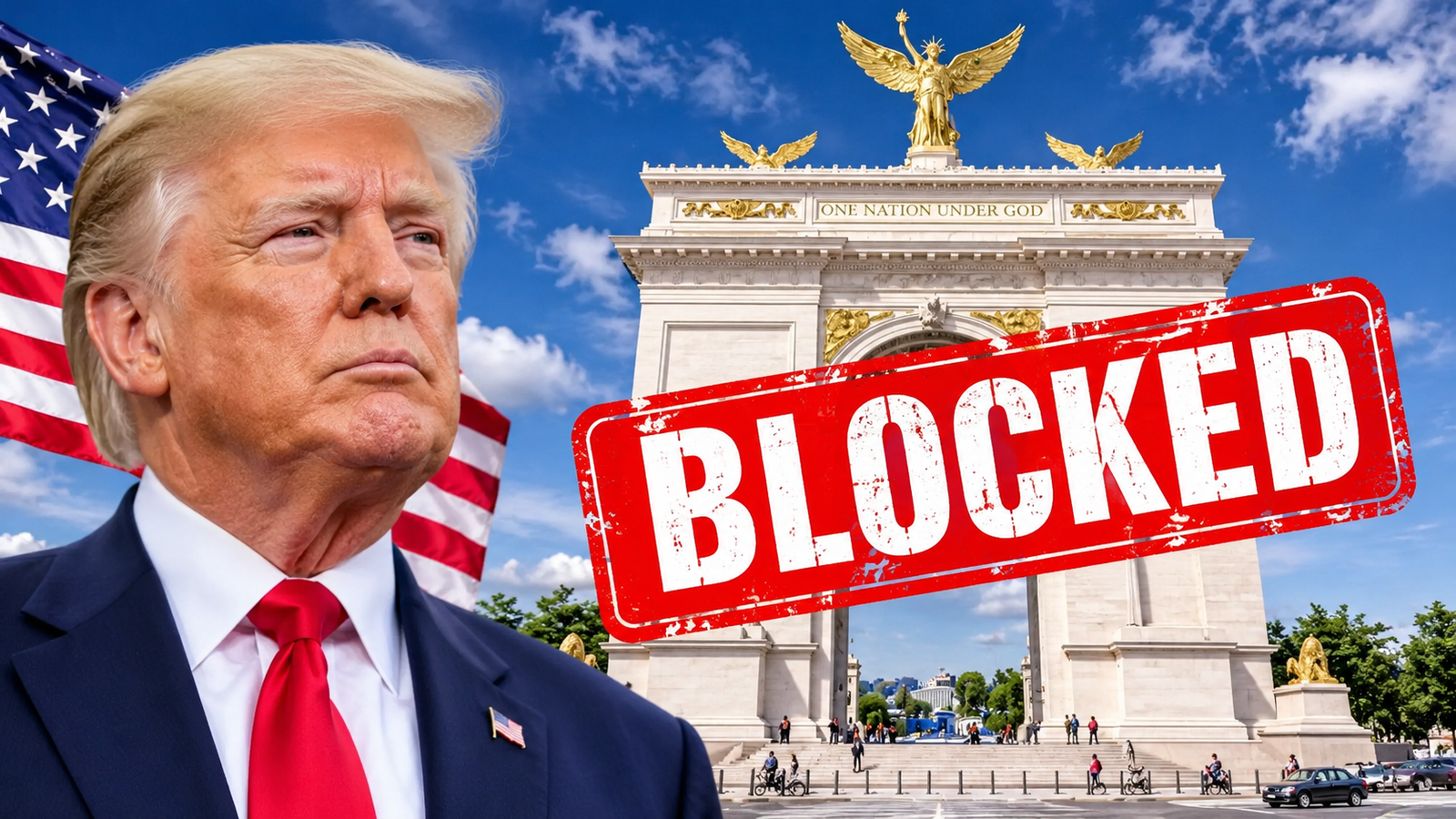
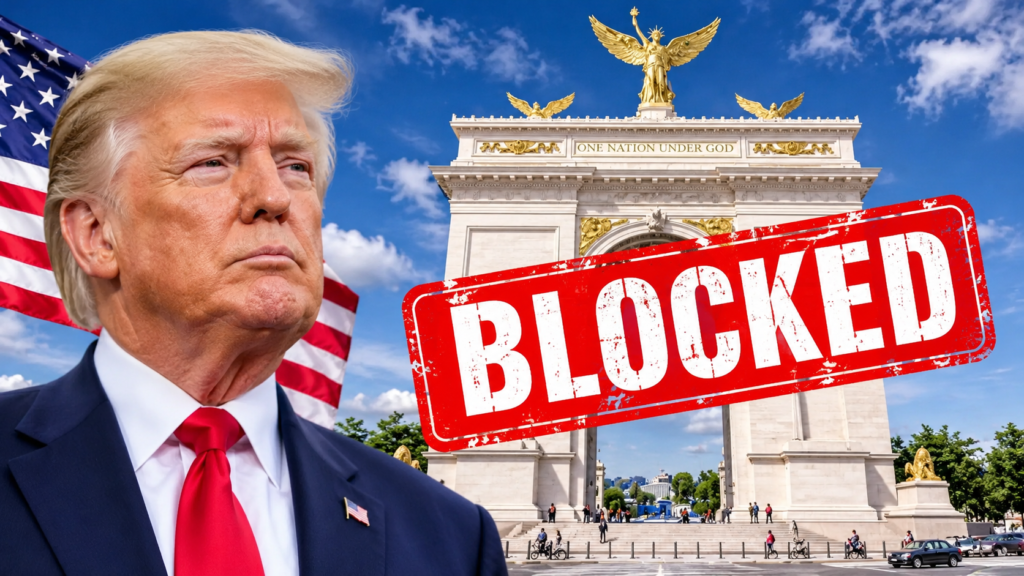
President Donald Trump’s proposed monumental arch in Washington has encountered another legal obstacle after a federal judge temporarily stopped construction, just hours after a government planning commission approved the project.
The decision has placed the future of the proposed monument under fresh uncertainty. The 250-foot structure, planned near Arlington National Cemetery, received an 8-4 approval vote from the National Capital Planning Commission on Thursday. However, US District Judge Tanya Chutkan subsequently issued a temporary order preventing construction from beginning for 14 days.
The ruling followed legal challenges from the governments of Washington, DC, and Virginia, alongside a separate group that includes military veterans and an architectural historian. The dispute centres on whether the administration has the legal authority to build the monument without additional congressional approval.
The planning commission’s decision represented an important step for the Trump administration, which has been seeking permission to move forward with the large-scale project.
The lengthy public hearing attracted objections from residents, lawmakers, veterans and other participants. Several speakers raised concerns about the proposed location, its impact on the surrounding historic landscape and the legal process behind its approval.
Despite those objections, the commission voted 8-4 in favour of the plans.
The court intervened shortly afterwards. Judge Chutkan’s temporary restraining order prevents the administration from starting construction while the legal challenges are considered.
According to reporting by the NPR, the judge’s decision came after the federal commission had approved the project and the administration had indicated that construction activities could begin quickly.
The order does not permanently cancel the proposed monument. Instead, it temporarily prevents construction while the court examines the arguments presented by the parties involved.
The legal opposition focuses on the authority behind the construction and the potential consequences for surrounding communities.
Washington, DC, and Virginia have argued that the project could create significant disruption, particularly because of its location near important transport routes and government landmarks.
The proposed site is Memorial Circle, close to the Arlington Memorial Bridge and the entrance to Arlington National Cemetery. This area connects major parts of the Washington region and experiences substantial traffic.
Local officials have raised concerns about construction activity, road disruption, emergency access and the financial responsibilities that could fall on local authorities.
Another major disagreement concerns congressional authorization. The administration has argued that an existing law dating back to 1925 provides the necessary authority for the project. Opponents dispute that interpretation and say Congress must specifically approve the construction.
Judge Chutkan’s decision means these questions will remain central to the legal proceedings.
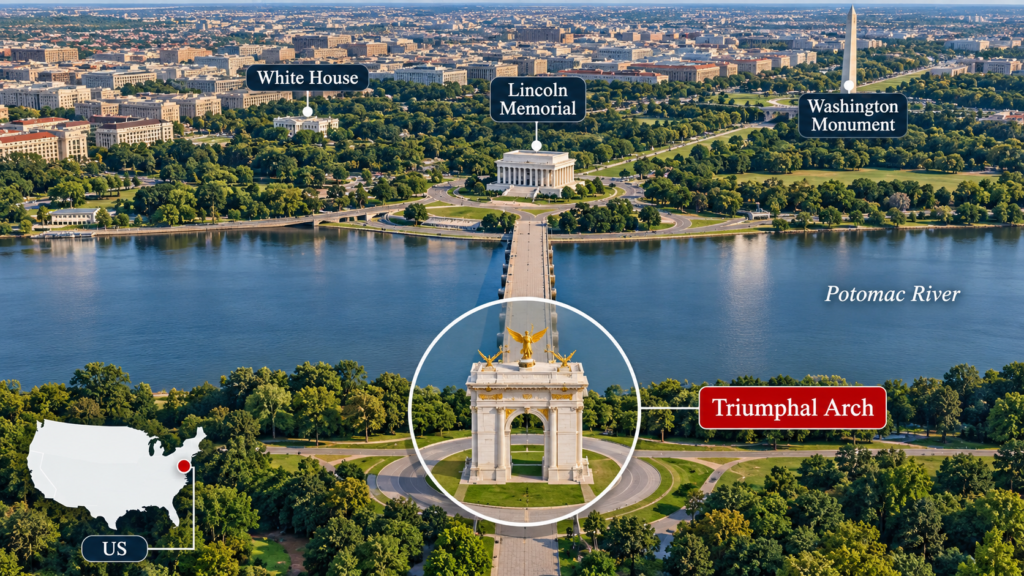
The proposed monument would stand approximately 250 feet (76 metres) tall, making it considerably larger than several well-known triumphal arches around the world.
Its design draws comparisons with the famous Arc de Triomphe in Paris, although the Washington proposal would be taller.
Plans show a large decorative structure featuring golden figures, eagles, an eternal flame and lighting intended to make the monument visible from a distance.
The administration has presented the arch as a national monument and a tribute to American history and military service.
Its proposed position, however, has generated debate because of its proximity to Arlington National Cemetery, where generations of American service members are buried.
Critics argue that introducing such a large structure could change the historic appearance of the surrounding memorial landscape.
The proposed arch has attracted support from administration officials who describe it as a lasting tribute to the country and its veterans.
Supporters argue that major monuments help preserve national history and provide public spaces for remembrance. They also point to the presence of similar monumental structures in major cities around the world.
Opponents, however, question whether the proposed design and location are appropriate. Some veterans and preservation advocates have expressed concern that the structure could affect the character of Arlington National Cemetery and the historic views around it.
The disagreement is therefore not limited to architectural preferences. It also involves questions about public land, historical preservation, government authority and the appropriate use of a nationally significant location.
The Reuters report on the Washington arch project provides additional background on the legal dispute and the administration’s plans.
The temporary restriction gives the court time to consider the legal arguments without allowing construction to move forward immediately.
The administration will have to respond to the court proceedings and address the concerns raised by the plaintiffs. The legal process could determine whether the project can proceed under its current approvals or whether further authorization is necessary.
The construction pause also creates uncertainty around the administration’s original timetable.
Earlier government statements indicated that initial excavation and foundation work could begin shortly after the necessary approvals. The broader construction process was expected to take several years.
However, those plans now depend on the outcome of the court proceedings and any additional requirements imposed by the authorities.
For now, the commission’s approval remains an important development, but it does not mean construction can immediately begin.
The arch is part of a broader series of projects through which Trump has sought to reshape prominent locations in the US capital.
His administration has also pursued changes involving the Lincoln Memorial Reflecting Pool and plans for a large ballroom at the White House.
These proposals have generated discussions about historic preservation, executive authority and the process for making major changes to nationally significant public spaces.
The dispute over the arch adds another legal and political dimension to those discussions. It highlights how projects involving federal property can face competing demands from government agencies, local authorities, preservation groups and the public.
The coming court proceedings will be important in determining whether the proposed monument can move beyond the approval stage.
The immediate question is whether the administration can satisfy the legal requirements raised by the plaintiffs and obtain permission to begin construction.
The 14-day order provides a temporary pause rather than a final decision on the monument’s future. Further court action could extend the delay, change the conditions or allow the project to move forward.
The outcome may also influence how the administration approaches other major construction proposals in Washington.
Until the legal questions are resolved, the proposed arch remains a plan awaiting the next stage of approval rather than an active construction project.
For residents, veterans and preservation advocates, the debate is about more than the size of a monument. It concerns the future appearance of one of America’s most historically significant areas and the legal process required to change it.
Source: BBC News, alongside reporting from Reuters, NPR and the Associated Press.
More US and world news: PeakHoursNews.