 11
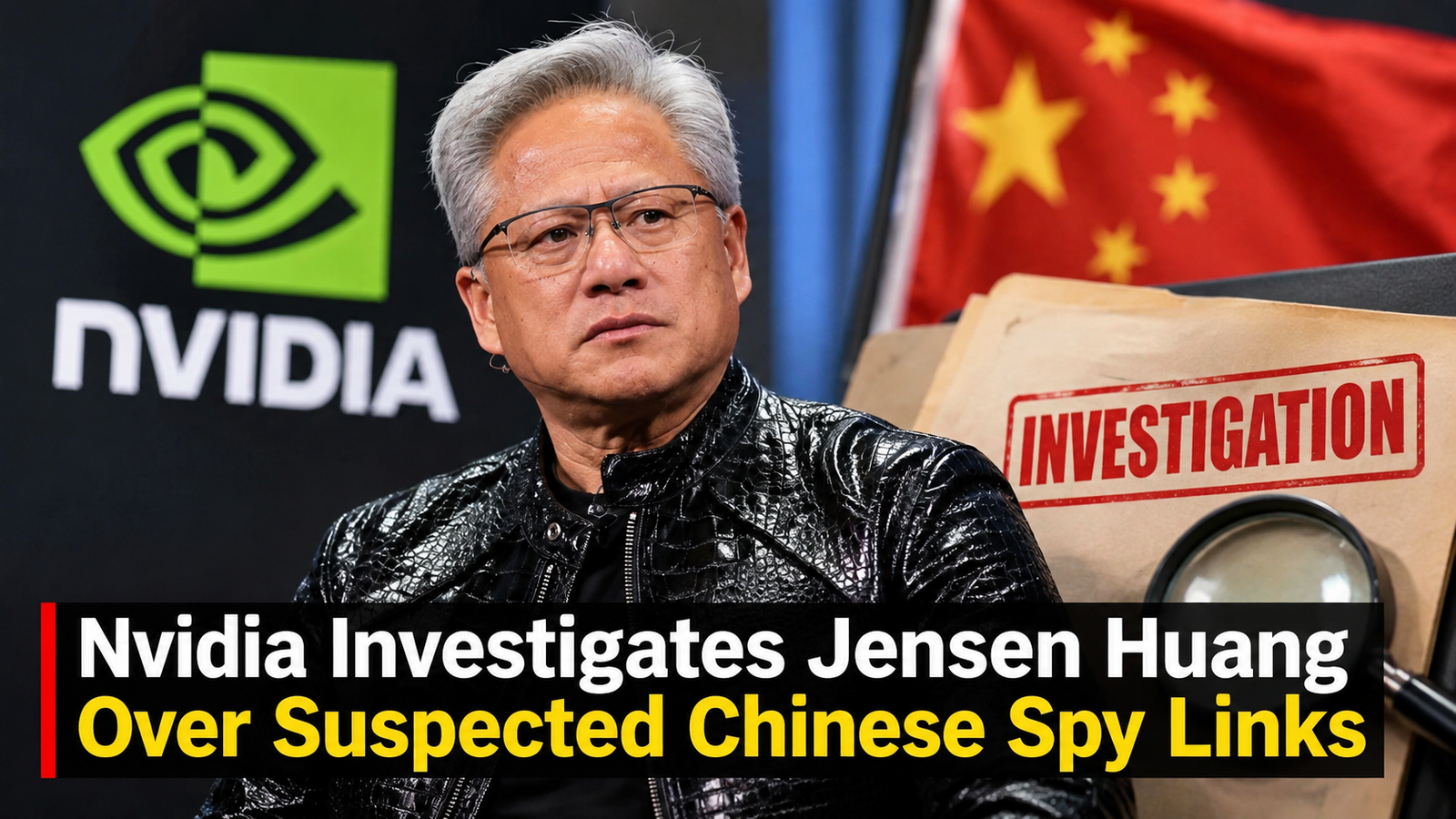
Nvidia Investigates Jensen Huang after reports linked its chief executive, to a woman suspected by US authorities of having connections with Chinese intelligence. The development has raised questions about corporate security, national interests and the growing competition between the United States and China over advanced artificial intelligence technology.
Huang, who leads one of the world’s most influential technology companies, has acknowledged having an affair and apologised to his family and colleagues. However, the wider issue has attracted attention because of allegations that the woman involved may have been connected to Chinese intelligence activities.
Nvidia says its board has no reason to believe that company secrets or US national security information were compromised. Nevertheless, the company has decided to examine the available information through an independent investigation.
The situation comes at a sensitive time for the semiconductor industry, as governments increasingly view advanced AI chips as strategic assets.
According to reporting by the BBC, the controversy centres on Jensen Huang’s reported relationship with Alice Huang, a Chinese businesswoman and former executive of Singapore-based data centre company Megaspeed.
Earlier reports by The New York Times said US authorities had concerns about Alice Huang’s alleged connections to Chinese intelligence. The reporting also raised questions about whether the relationship could have been part of a wider foreign intelligence effort targeting the Nvidia chief executive.
Megaspeed has attracted scrutiny because it purchases Nvidia AI chips. US authorities have reportedly examined concerns that the company may have helped Beijing obtain advanced semiconductor technology restricted from export to China.
These allegations have made the situation particularly sensitive. Nvidia’s products are essential to the development of advanced artificial intelligence systems, and access to its most powerful chips has become a major issue in US-China relations.
It is important to distinguish between reported intelligence concerns and established facts. The allegations have not established that Jensen Huang knowingly participated in espionage or that Nvidia information was transferred to Chinese authorities.
Following the reports, Huang addressed Nvidia employees in a message acknowledging that he had been unfaithful to his wife.
He accepted responsibility for his personal decisions and apologised to his family, colleagues, business partners and shareholders.
Huang also addressed the national security concerns raised by media reports. He said he supported the independent investigation and would cooperate fully with the review.
His message sought to reassure employees and investors that he remained committed to Nvidia and its responsibilities.
The admission has added a personal dimension to a story that is increasingly being discussed as a corporate governance and national security issue. While the affair itself is a private matter, questions about possible foreign intelligence activity have brought the company’s leadership under greater scrutiny.
Nvidia confirmed that its board had initiated an independent investigation following reports that its founder and chief executive may have been targeted by a foreign intelligence effort.
The company said a committee made up of independent directors would oversee the investigation with assistance from external legal counsel.
Nvidia also stated that its board had no reason to believe that either US national security or the company’s confidential information had been compromised.
This distinction is important. The investigation is intended to examine the available information and determine whether any risks or inappropriate access occurred. It does not mean that a security breach has already been established.
The company has also indicated that Huang will continue serving as chief executive while the investigation proceeds.
For Nvidia, maintaining confidence among employees, customers, investors and government partners will be an important part of managing the situation.
Nvidia occupies a central position in the global artificial intelligence industry. Its graphics processing units (GPUs) are widely used to train and operate advanced AI models, power data centres and support research in several technology sectors.
Major technology companies rely on Nvidia hardware to develop increasingly sophisticated artificial intelligence systems.
This importance has made semiconductor exports a major part of US policy towards China. Washington has introduced restrictions on certain advanced chips and related technologies because of concerns about their potential military and strategic applications.
China, meanwhile, continues to invest heavily in developing its domestic semiconductor industry and reducing reliance on foreign suppliers.
The competition is not limited to commercial markets. Advanced computing capabilities can influence economic productivity, scientific research, cybersecurity and military technology.
That is why allegations involving a senior technology executive and a suspected foreign intelligence connection can attract attention well beyond the company itself.
For more context on the wider technology industry, readers can explore more technology coverage on PeakHoursNews.
The investigation creates uncertainty around Nvidia’s leadership and corporate governance, although its immediate business impact remains unclear.
Investors will likely watch for information about the investigation’s findings, any possible regulatory consequences and whether the controversy affects Nvidia’s relationships with customers or government officials.
The company has become a major force in the AI industry, benefiting from enormous demand for advanced computing hardware. Its position also means that questions about its leadership can attract significant attention from financial markets.
However, there is currently no confirmed evidence that the allegations have disrupted Nvidia’s operations or exposed its confidential technology.
The company has maintained that Huang will continue leading the business. The outcome of the independent review may help clarify whether additional security measures or governance changes are necessary.
The next important development will be the findings of Nvidia’s independent investigation.
The review will examine available information surrounding the reported foreign intelligence effort and determine whether any company or national security concerns require further action.
US lawmakers have also expressed interest in receiving explanations from Huang about the allegations and Nvidia’s safeguards for sensitive technology.
The situation could therefore develop across several areas, including corporate governance, congressional oversight and US-China technology policy.
For now, the allegations remain a matter of investigation rather than proof of espionage or a confirmed security breach.
Nvidia’s response will be closely watched because the company plays such an important role in the global AI industry. The findings could influence how major technology companies approach executive security, sensitive business relationships and the protection of strategic information.
As the investigation continues, investors, policymakers and technology businesses will be looking for clear answers about whether the reported relationship created any genuine risk to Nvidia or US national security.
Sources: BBC News, Reuters and Associated Press reporting.