 11
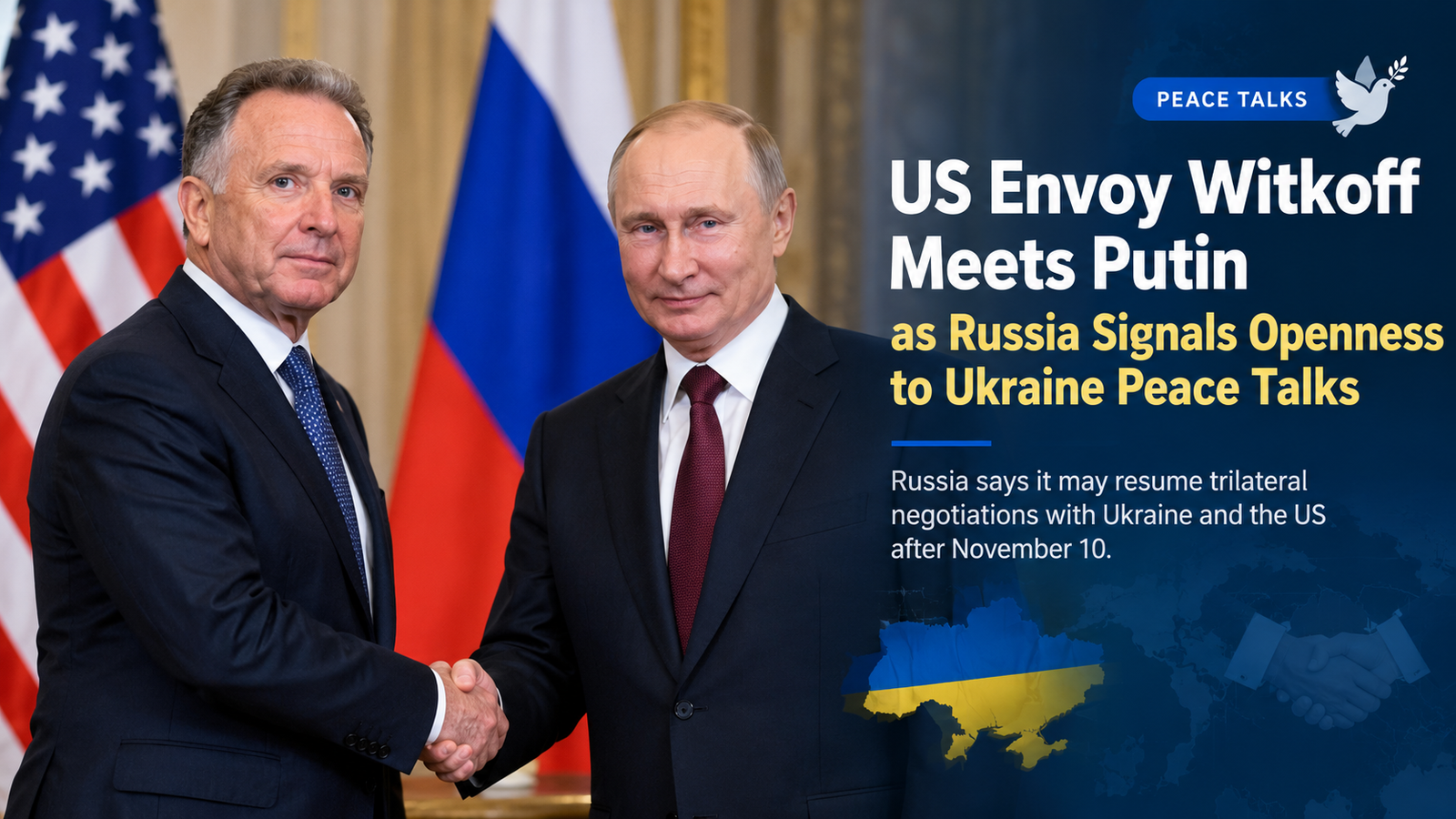
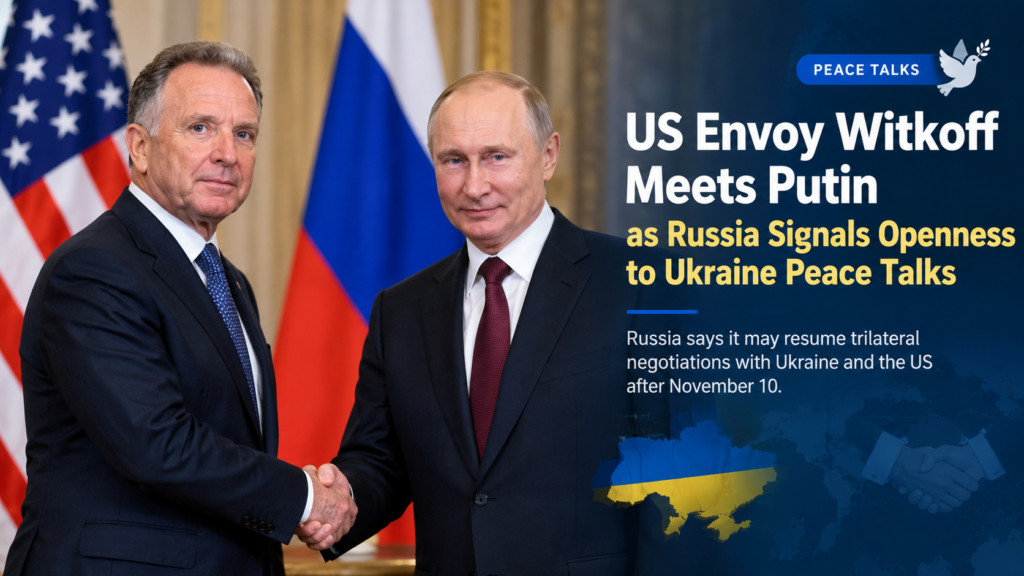
Russia has indicated it may be ready to resume trilateral negotiations with Ukraine and the United States after November 10, following talks between US special envoy Steve Witkoff and Russian President Vladimir Putin in St. Petersburg.
ST. PETERSBURG, October 21, 2026 — US special envoy Steve Witkoff met Russian President Vladimir Putin on Wednesday to discuss efforts to end the war in Ukraine and the possibility of resuming peace negotiations involving Russia, Ukraine and the United States.
The meeting took place in St. Petersburg following Witkoff’s discussions with Ukrainian President Volodymyr Zelensky and European leaders in Oslo, Norway, a day earlier. The diplomatic meetings were part of Washington’s efforts to advance proposals for ending the conflict.
According to Yuri Ushakov, a Kremlin foreign policy aide, Putin indicated that Russia was prepared in principle to resume trilateral negotiations around November 10. Ushakov made the announcement following the meeting, which lasted approximately three hours.
However, the statement did not establish that a new round of negotiations had been formally scheduled. Important questions about the terms of a possible settlement remain unresolved.
The potential resumption of talks was a central issue during Witkoff’s meeting with Putin. The proposed format would bring together representatives of Russia, Ukraine and the United States to discuss ways to end the war.
Ushakov said Russia wanted future discussions to address a security framework for both Russia and Ukraine after the conflict ends. He did not provide detailed terms for such an arrangement.
For further background on diplomatic efforts surrounding the conflict, readers can consult Reuters’ reporting on Russia’s willingness to resume Ukraine peace talks.
According to Ushakov, the proposals presented by the Ukrainian and European sides offered limited practical value for resolving the conflict. This assessment reflected the Russian side’s position and did not indicate that Ukraine or its European partners had accepted Moscow’s view.
The proposed negotiations remain a diplomatic possibility rather than a confirmed peace agreement. Further discussions would be necessary to determine whether the parties can reach common ground on the conditions for ending the war.
Before travelling to Russia, Witkoff met Zelensky in Oslo on Tuesday. The discussions involved efforts to develop a coordinated approach to negotiations with Moscow.
A US official described the Oslo discussions as making meaningful progress. According to the official, the meetings addressed several elements of a potential peace framework, including long-term security guarantees for Ukraine, a postwar economic plan and broader European security arrangements.
These subjects are significant because any lasting settlement would need to address Ukraine’s security following the conflict, as well as the wider regional implications of a possible agreement.
Zelensky has emphasized that Ukraine must be included in decisions concerning its future. He has also called for security guarantees to help prevent another Russian invasion.
Despite the reported progress in Oslo, the subsequent meeting between Witkoff and Putin did not produce a publicly announced comprehensive peace agreement.
Readers can also explore our earlier report on Trump and Putin’s discussions about a possible deal to end the Ukraine war, which provides additional context about diplomatic efforts involving the two leaders.
The meeting in Russia also coincided with the release of Stephen Hubbard, a 74-year-old US citizen who had been detained in Russia for more than four years.
The release was announced during Witkoff’s visit. The US envoy publicly thanked Putin for Hubbard’s release, and a video obtained by CNN showed Hubbard speaking with Witkoff at the airport in St. Petersburg.
Hubbard had been accused of fighting for Ukrainian forces and had pleaded guilty in Russia. His family had disputed the allegation that he would have voluntarily fought in the conflict.
US President Donald Trump welcomed Hubbard’s release. However, the public reporting did not establish that the release formed part of a formal prisoner exchange.
The development represented a separate consular and diplomatic issue alongside discussions concerning Ukraine.
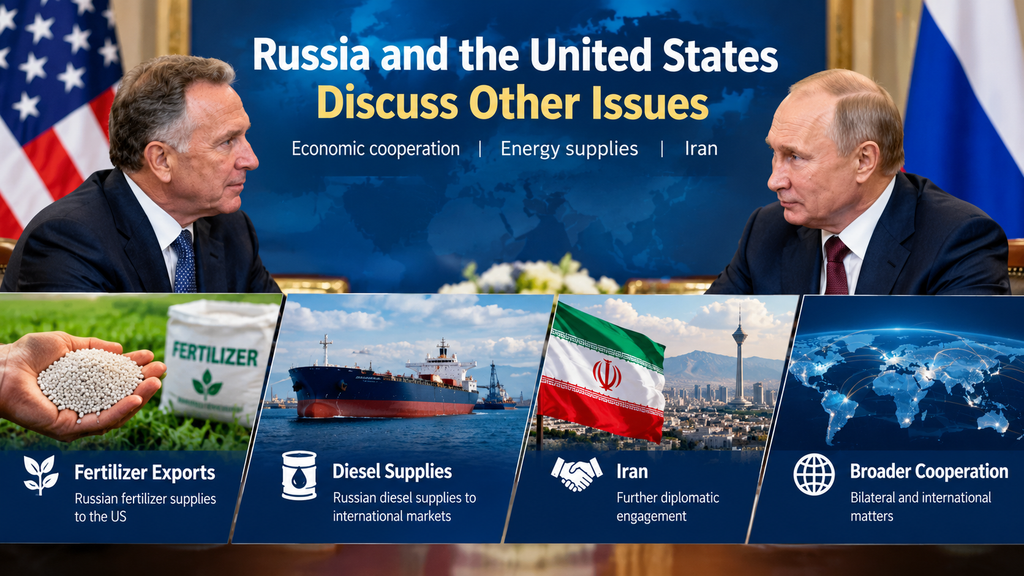
According to reports of the meeting, Putin and Witkoff also discussed potential economic cooperation between Russia and the United States, including Russian fertilizer exports to the US.
The discussions reportedly touched on Russian diesel supplies to international markets and the possibility of further diplomatic engagement over Iran.
Putin expressed Russia’s willingness to support diplomatic efforts to address the crisis involving Tehran, according to accounts of the meeting.
These additional topics indicate that the discussions covered broader bilateral and international matters. However, the available reporting did not establish that the meeting resulted in finalized agreements on these issues.
The possibility of renewed negotiations does not mean that Russia and Ukraine have reached agreement on the terms required to end the war.
Security arrangements, territorial questions and the future relationship between Ukraine and its international partners remain important issues in the wider diplomatic process.
Ukraine has emphasized the importance of security guarantees and its participation in decisions affecting the country. Russia, meanwhile, has indicated that it wants a post-conflict security framework to be part of future discussions.
The parties would need to address these and other differences before a comprehensive settlement could be achieved.
As of October 21, the public statements following the Witkoff-Putin meeting indicated a possible opening for renewed negotiations, but no final peace agreement had been announced.
The next potential step is the resumption of trilateral negotiations around November 10, subject to further diplomatic decisions and agreement on the process.
Such talks could provide an opportunity for Russia, Ukraine and the United States to examine proposals and discuss outstanding issues. Their outcome, however, remains uncertain.
The Oslo discussions, followed by Witkoff’s meeting with Putin, show that diplomatic engagement is continuing. Whether these efforts produce a workable settlement will depend on the positions taken by the parties and their willingness to agree on the terms of a lasting peace.
For now, Russia’s stated openness to renewed negotiations is a diplomatic development, not confirmation that the war is nearing an end.